ICHRA insights for brokers and employers

Understanding ICHRA usually starts with a simple question. It rarely ends there.
As conversations move from definitions to real decisions, details start to matter. What options look like in a specific market, how employees experience enrollment, and how employers think about cost over time.
This is a place to explore those layers. You'll find practical explanations, real examples, and resources that help you understand how ICHRA works in practice, not just in theory.

Blogs and articles

Stay current on how ICHRA is evolving across markets, industries, and plan strategies. Articles focus on practical education based on real employer and broker use cases.
  • bring ichra into the benefits conversation early

    the ICHRA conversation

    Explore why brokers should lead the ICHRA conversation to help clients navigate their benefits options effectively.

    Read full blog
  • Why ICHRA is moving from consideration to adoption: A closer look at the data

    Rising ICHRA adoption

    Explore the implications of rising ICHRA adoption for client strategy in today's evolving employer benefits landscape.

    Read full blog
  • Why brokers are making the switch to ICHRA

    Why brokers are making the switch to ICHRA

    Discover why brokers are choosing to switch to ICHRA and how it can transform healthcare benefits for employers.

    Read full blog
Read More Insights

Broker resources

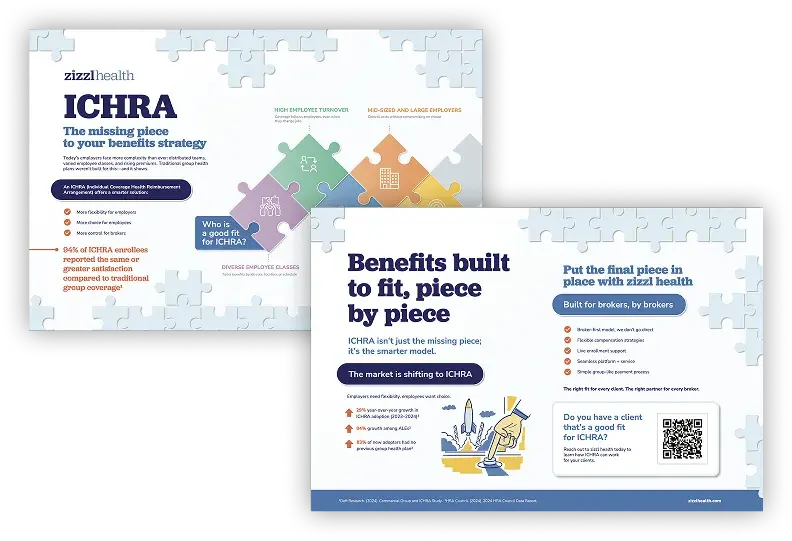
Resources built for brokers who are guiding ICHRA conversations, supporting renewals, and expanding their approach to benefits.
Materials are designed to support real conversations with employers, from early education to implementation planning.
Subscribe to Broker Buzz

Employer resources

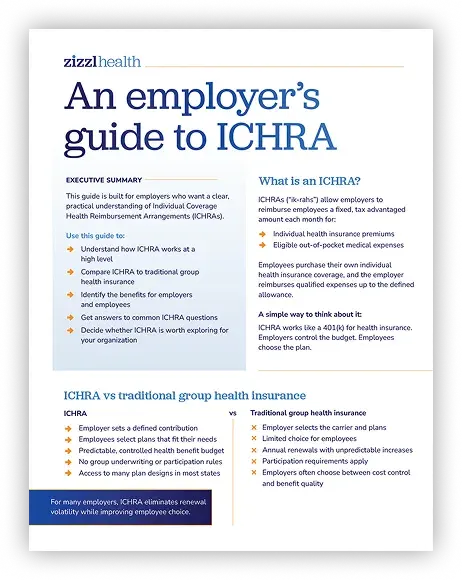
For employers evaluating ICHRA, these resources explain what to expect, how the model works, and how it compares to traditional group coverage.
Content focuses on decision support, employee experience, and implementation considerations.
Explore Employer Resources
An employer
Employer guide to ICHRA
Download

Case studies

See how organizations have approached ICHRA in real situations, including cost considerations, employee experience, and transition planning.
Each case study outlines the situation, the approach, and the result so you can evaluate how ICHRA may apply in a similar context.
Browse Case Studies

Upcoming events

Opportunities to learn more about ICHRA through webinars, discussions, and guided sessions.
Events are designed to answer questions, walk through real scenarios, and provide space for deeper understanding.
  • <Event 1>

    Date | Time

  • <Event 2>

    Date | Time

  • <Event 3>

    Date | Time

ICHRA FAQs and definitions
Clear answers to common questions, along with straightforward explanations of key ICHRA terms. This section is designed to help you quickly understand how ICHRA works in practice and what to consider as you evaluate it.
An Individual Coverage Health Reimbursement Arrangement (ICHRA) is a health benefit that allows employers to provide a fixed monthly contribution for employees to purchase their own individual health insurance and pay for eligible medical expenses.
Employers set a defined contribution amount. Employees choose an individual health plan that meets coverage requirements. Premiums and eligible expenses are paid or reimbursed based on the employer's plan design.
Employers of any size can offer an ICHRA. Contributions can be structured based on employee classes such as full-time, part-time, or location, within federal guidelines.
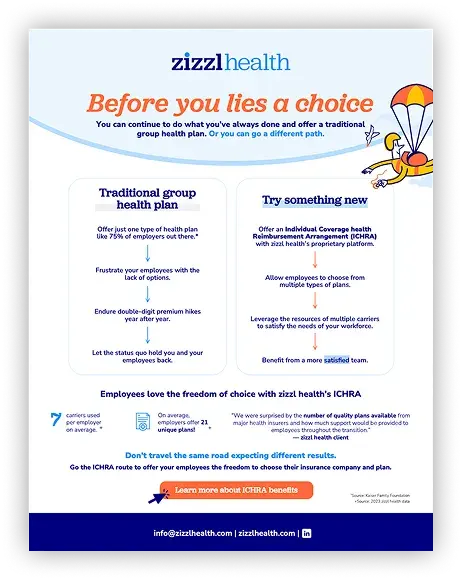
With a traditional group plan, the employer selects one plan for all employees. With ICHRA, the employer sets the budget, and employees select their own coverage from available individual market options.
Defined contribution means the employer sets a fixed amount they will contribute toward health benefits. Costs are determined by that contribution rather than annual premium increases tied to group claims.
Community rating means insurance premiums are set based on factors like age and location, not an employer's claims history or group health risk.
When structured correctly, ICHRA plans can meet Affordable Care Act requirements. Employers must follow guidelines related to affordability, required notices, and plan documentation.
Depending on the plan design, employers may pay premiums directly, or employees may pay and submit for reimbursement. Some arrangements allow payroll deductions to simplify the process.
If you want a more detailed walkthrough, including step-by-step explanations and examples, explore the full overview. How ICHRA Works, For Brokers, For Employers.
Do Not Sell or Share My Personal information Limit the Use Of My Sensitive Personal Information