ICHRA vs fully insured group health plans
ICHRA and fully insured group health plans are both employer-sponsored health benefits. The difference is how the coverage is funded and structured.
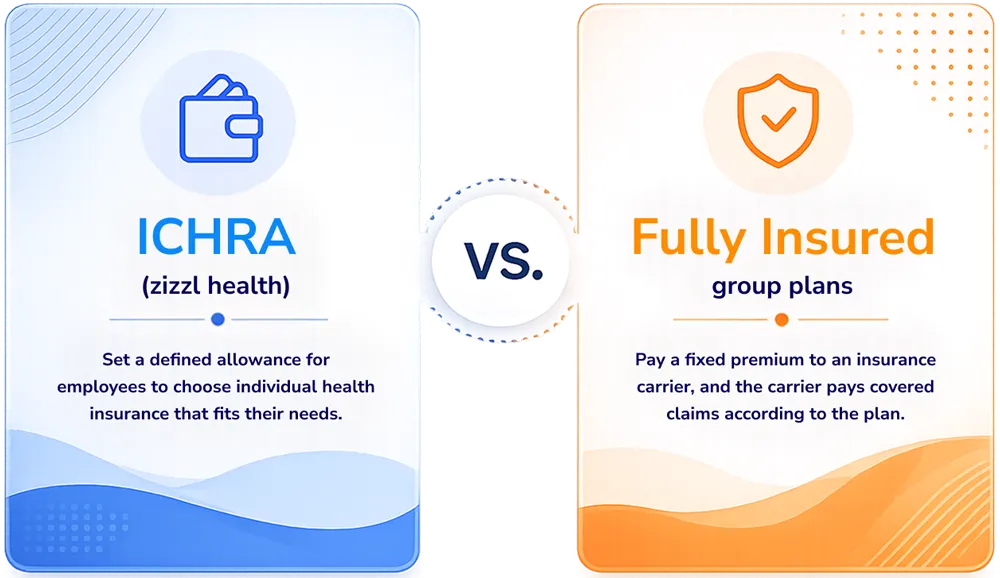
What's the difference between a fully insured plan and ICHRA?
At-a-glance:

Structure
Fully insured is a carrier-issued group policy. ICHRA is a defined contribution model.

Risk exposure
Fully insured pricing reflects carrier risk assumptions. ICHRA employer costs are tied to the set contribution.

Cost control
Fully insured premiums are set at renewal. ICHRA contributions are defined by the employer.

Employee choice
Fully insured offers employer-selected plans. ICHRA allows employees to choose individual plans in their area.
When does ICHRA make sense vs. fully insured?
The right model depends on your budget priorities, workforce structure, and how you want the plan to operate.
Fully insured plans make sense when:
- The organization prefers a more traditional group structure with a single plan sponsor.
- Leadership is comfortable managing annual renewal negotiations.
- Workforce needs are relatively homogeneous and concentrated in one geographic area.
- The organization prefers carrier-led billing and plan administration.
ICHRA makes sense when:
- The employer wants to define and stabilize its health benefits budget.
- Renewal volatility has created financial strain or unpredictability.
- The workforce spans multiple states or rating areas.
- Employees value broader carrier and plan choice.
- The organization is open to a defined contribution funding structure.
The right model depends on your plan goals, your employee footprint across states, and the level of flexibility you're looking for.
See How ICHRA Works 
ICHRA in the real world
Below are outcome snapshots from employers who evaluated fully insured renewal increases and implemented ICHRA.
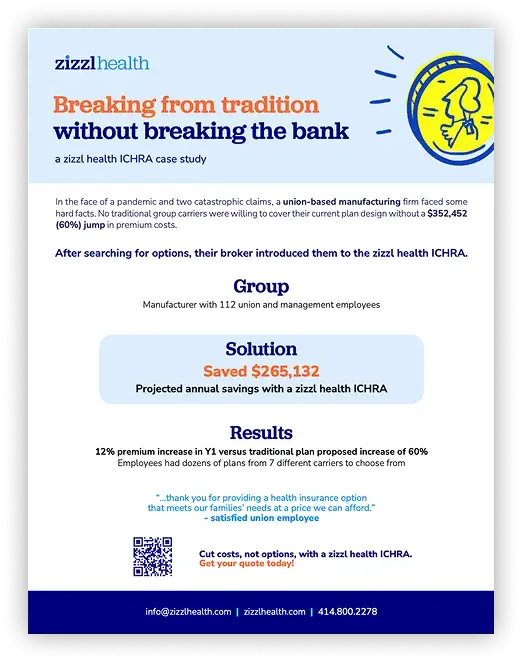
Union-based manufacturer
- Proposed fully insured renewal increase: 60%
- Year one increase after moving to ICHRA: 12%
- Projected annual savings: $265,132
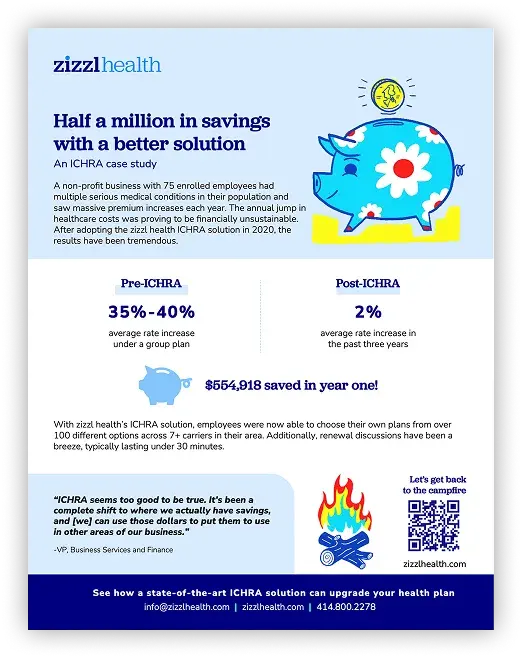
Growing non-profit
- Prior annual fully insured increases: 35–40%
- Average increase over three years after implementing ICHRA: 12%
- Year one savings: $554,918
Evaluate ICHRA vs fully insured for your organization
Review the strategic considerations behind choosing ICHRA, including funding flexibility, compliance structure, and employee plan selection dynamics.
When ICHRA May Be a Better Fit