ICHRA vs fully insured group health plans

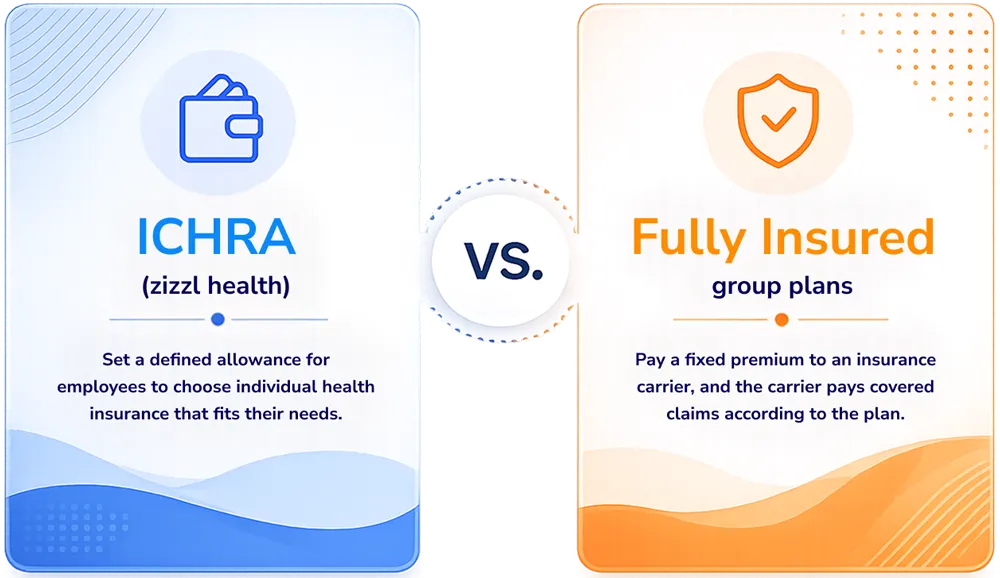
ICHRA and fully insured group health plans are both employer-sponsored health benefits. The difference is how the coverage is funded and structured.
ivfiTopCard

What's the difference between a fully insured plan and ICHRA?

At-a-glance:
  • Structure

    Fully insured is a carrier-issued group policy. ICHRA is a defined contribution model.

  • Risk exposure

    Fully insured pricing reflects carrier risk assumptions. ICHRA employer costs are tied to the set contribution.

  • Cost control

    Fully insured premiums are set at renewal. ICHRA contributions are defined by the employer.

  • Employee choice

    Fully insured offers employer-selected plans. ICHRA allows employees to choose individual plans in their area.

ICHRA vs fully insured: a side-by-side comparison

Fully insured
ICHRA
Structure
Fully insured:
The employer purchases a group policy and pays premiums set by the carrier.
ICHRA:
The employer sets a defined monthly contribution, and employees purchase individual coverage using that allowance.
Cost predictability
Fully insured:
Premiums are reset at renewal each year. Employers receive updated rates during the renewal cycle and must adjust budgets based on the carrier's pricing for the upcoming plan year.
ICHRA:
The employer sets the monthly contribution in advance of the next renewal cycle. Budget planning centers on the defined contribution rather than carrier rate changes.
Risk exposure
Fully insured:
Renewal pricing reflects carrier underwriting, pooled claims experience, and risk assumptions. Year-to-year premium changes may be influenced by group claims and broader market factors.
ICHRA:
Employer costs are not directly tied to the group's claims experience. Individual premiums are community rated and based on age and geographic rating area rather than employer-specific utilization.
Plan selection and employee choice
Fully insured:
The carrier and employer set the available plan options. Employees choose from the plans offered within the carrier's networks.
ICHRA:
Employees select and enroll in their own individual plans available in their rating area. The employer sets the contribution but does not select the plan.
Premium structure and variability
Fully insured:
Rates are based on pooled group underwriting and renewal negotiations. Premiums are generally consistent across the covered employee group, subject to renewal changes.
ICHRA:
Premiums are based on individual market factors such as age, rating area, and plan selection. Costs can vary across employees and geographic markets.
Administration
Fully insured:
Carrier manages plan design, billing, and renewal rate development. Employers manage eligibility, enrollment, payroll deductions, and required federal reporting.
ICHRA:
Employers establish plan documentation, contribution classes, reimbursement processes, and required notices. The arrangement must follow ACA affordability rules and ERISA guidelines.
Ongoing plan management
Fully insured:
Carrier manages claims processing and plan operations. Employer manages enrollments, payroll deductions, employee changes, and annual renewal negotiations.
ICHRA:
Employer or third-party administrator manages reimbursement validation, documentation tracking, class eligibility monitoring, required notices, and ongoing compliance oversight.
Compliance
Fully insured:
The insurance carrier is responsible for plan design compliance and state insurance regulations. Employers must meet ACA employer mandate requirements, reporting obligations, and applicable federal benefit laws.
ICHRA:
Employers must structure the ICHRA to meet ACA affordability standards, class rules, notice requirements, and reimbursement documentation guidelines. Ongoing compliance oversight is required to maintain eligibility and avoid penalties.

When does ICHRA make sense vs. fully insured?

The right model depends on your budget priorities, workforce structure, and how you want the plan to operate.
Fully insured plans make sense when:
  • The organization prefers a more traditional group structure with a single plan sponsor.
  • Leadership is comfortable managing annual renewal negotiations.
  • Workforce needs are relatively homogeneous and concentrated in one geographic area.
  • The organization prefers carrier-led billing and plan administration.
ICHRA makes sense when:
  • The employer wants to define and stabilize its health benefits budget.
  • Renewal volatility has created financial strain or unpredictability.
  • The workforce spans multiple states or rating areas.
  • Employees value broader carrier and plan choice.
  • The organization is open to a defined contribution funding structure.
The right model depends on your plan goals, your employee footprint across states, and the level of flexibility you're looking for.
See How ICHRA Works

ICHRA in the real world

Below are outcome snapshots from employers who evaluated fully insured renewal increases and implemented ICHRA.
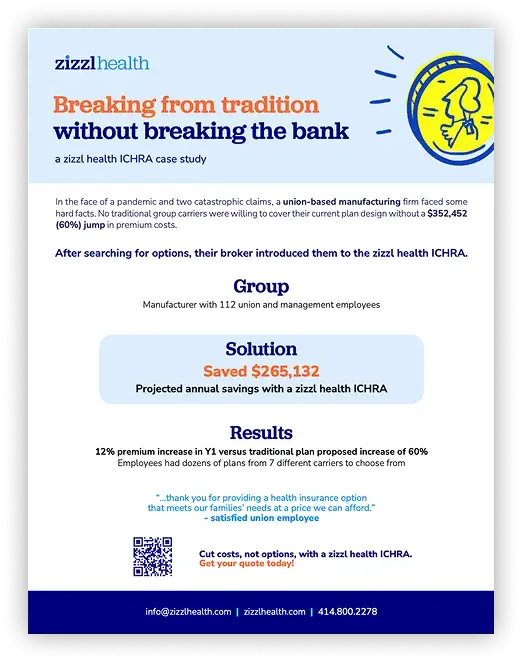
zizzl health ICHRA case study: breaking from tradition without breaking the bank
Union-based manufacturer
  • Proposed fully insured renewal increase: 60%
  • Year one increase after moving to ICHRA: 12%
  • Projected annual savings: $265,132
Read the Case Study
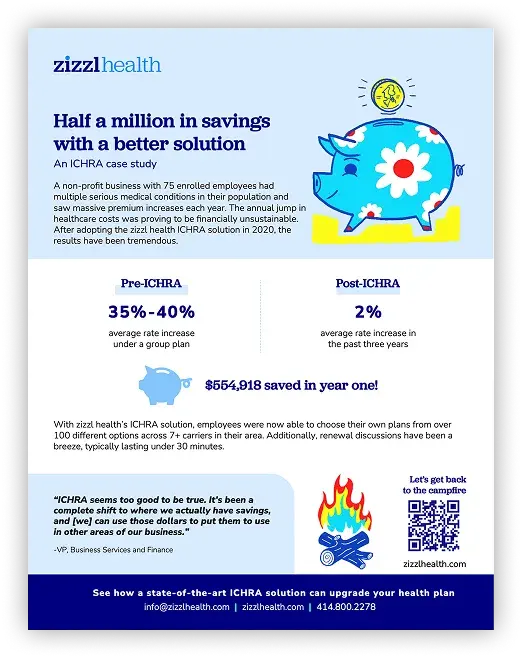
Growing non-profit
  • Prior annual fully insured increases: 35–40%
  • Average increase over three years after implementing ICHRA: 12%
  • Year one savings: $554,918
Read the Case Study
zizzl health ICHRA case study: half a million in savings with a better solution
ICHRA FAQs

The primary difference is funding structure. In a fully insured plan, the employer purchases a group policy with premiums set by the carrier. In an ICHRA, the employer sets a defined contribution and reimburses employees for individual coverage.

Yes. When properly structured and administered, ICHRA is considered employer-sponsored group health coverage under federal law.

Employees select and own their individual policies, but employer affordability requirements still apply for applicable large employers. Premium pricing is based on community rating in the individual market rather than the employer's group claims.

Stability depends on how you define it. Fully insured plans provide a single carrier structure but are subject to annual renewal pricing. ICHRA allows employers to define their budget in advance, while individual market premiums may vary by region and age.

Yes. Employers may transition at plan renewal, provided notice and compliance requirements are met. Careful planning and communication are required.

It depends on affordability. If the ICHRA allowance makes the lowest-cost silver plan in the employee's area affordable under ACA guidelines, the employee is not eligible for Marketplace subsidies. If the ICHRA is considered unaffordable, the employee can decline it and may qualify for premium tax credits, depending on household income and eligibility rules.

ICHRA must meet ACA affordability standards for applicable large employers. Affordability is based on whether the employee's required contribution for the lowest-cost silver plan falls within the federal percentage-of-income threshold. Employers use approved safe harbor methods to calculate this. Contribution levels and location both affect the outcome, so design matters.

Sometimes. With ICHRA, employees choose their own individual coverage. Some are comfortable enrolling on their own, while others benefit from guidance on plan options, networks, and cost differences. Support needs vary by workforce and familiarity with the individual market.

Most of the effort happens upfront. The first year involves employee education, enrollment coordination, required notices, and payroll alignment. After implementation, administration typically becomes more routine.

Do Not Sell or Share My Personal information Limit the Use Of My Sensitive Personal Information