ICHRA vs traditional self-funded health plans
When employers compare ICHRA vs traditional self-funding, they want to know how much costs will fluctuate and who covers large claims: self-funded costs rise and fall with claims and ICHRA sets a fixed employer contribution.
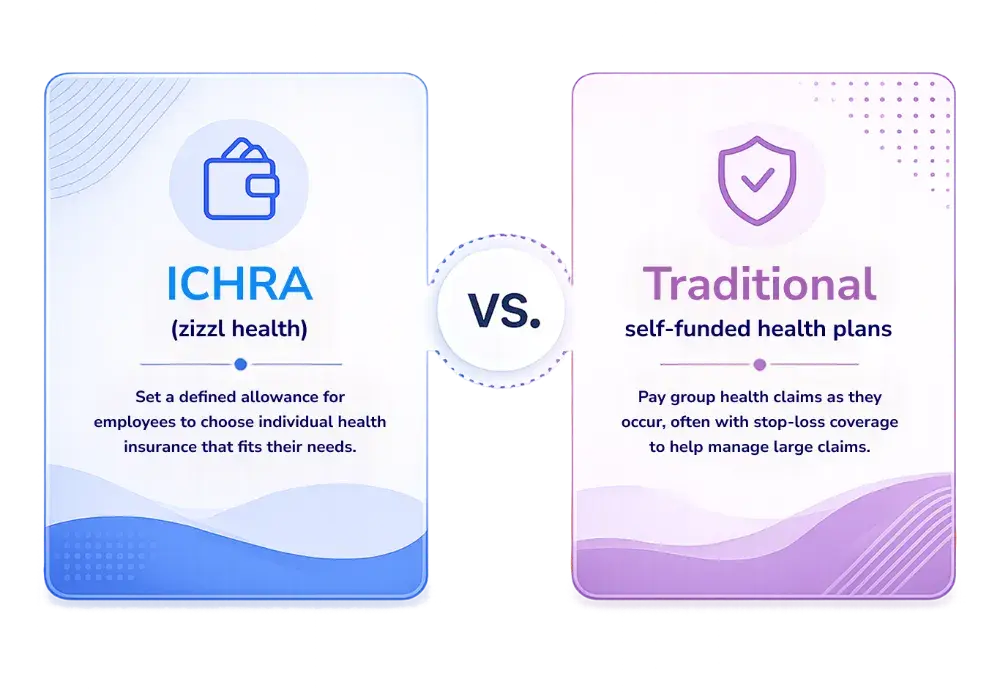
When does ICHRA make sense vs. self-funded?
The right model depends on your budget goals, your tolerance for claims volatility, and how much administrative lift your team can support.
Self-funded plans make sense when:
- The organization can absorb claims-driven cost swings during the year.
- Leadership wants direct control over plan design and is comfortable managing vendors.
- The employer has the scale to support stop-loss underwriting and ongoing monitoring.
- The organization wants more direct visibility into claims activity and plan performance.
- Leadership is comfortable with stop-loss as part of the risk management approach.
ICHRA makes sense when:
- The employer wants to define and manage benefit spend through a set allowance.
- Claims volatility has made budgeting difficult year over year.
- A large specific individual laser is put on an employee.
- The workforce spans multiple states or rating areas, and employees need local plan options.
- Employees value broader carrier and plan choice in their home market.
- The organization is evaluating self-funded health plan alternatives that reduce reliance on claims-driven cost outcomes.

What outcomes can look like with ICHRA
Below are two case study snapshots that show what changed after each employer moved to ICHRA.
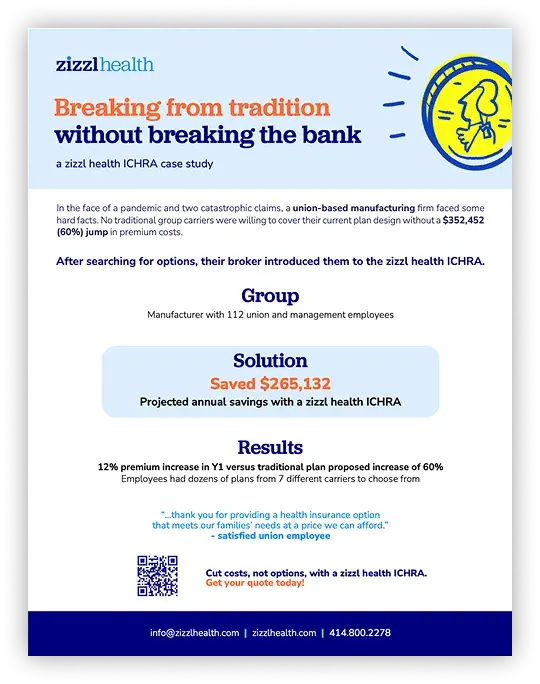
Union-based manufacturer
- 60% proposed increase under the prior approach
- 12% increase in year one after moving to ICHRA
- $265,132 projected annual savings
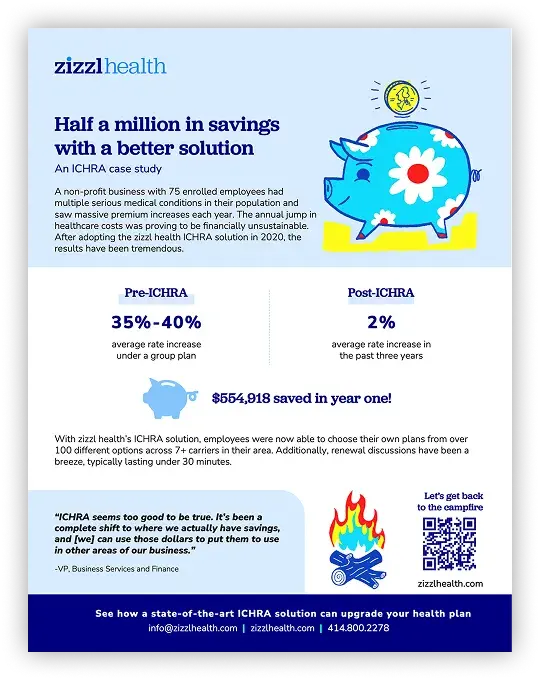
Growing non-profit
- 35% to 40% typical annual increases under the prior approach
- 2% average increase over the next three years after moving to ICHRA
- $554,918 saved in year one
Compare ICHRA vs self-funded before renewal
Consider how each model affects cost variability, risk exposure, and the work required to manage it.
When Employers Consider ICHRA